Humanoid robots burn through batteries. UBTech owns the fleet.
Not investment advice.
A humanoid robot charges its battery more times in a week than your car does in a year.
That number decides who makes money in robotics.
This week an industry report sized the humanoid's real constraint. Today's robots run 2 to 4 hours per charge. A factory shift needs 8 to 12. The target is a battery worth 10% of the robot's price.
The part most people missed: the leaders already fixed runtime, and the fix changes the math. Boston Dynamics' Atlas and UBTech's Walker S2 walk to a rack and swap their own batteries in under three minutes. A pack runs about two hours and recharges in 90 minutes, so a robot working around the clock keeps two packs in rotation, each charged six or seven times a day. The 10% target assumes one pack. At that duty the battery is a consumable.
Clargus found the gap as a graph edge, two to four hours falls short of eight to twelve, and the one case study attached to it: UBTech's Walker S2.
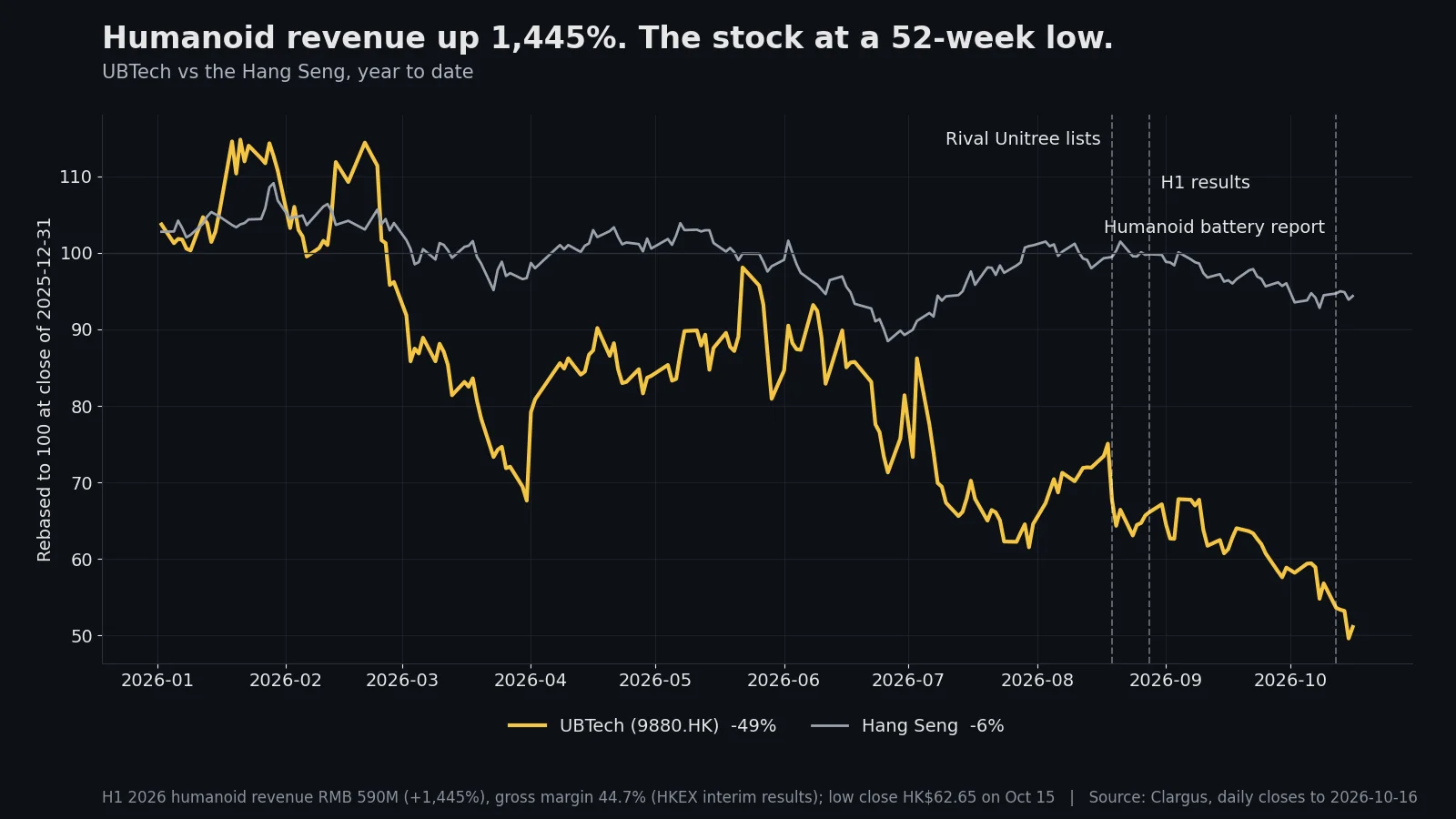
The market is selling the company with the installed base. UBTech's humanoid revenue rose 1,445% in the first half, gross margin 44.7%, and it targets 10,000 units this year. The stock is down 49% this year and hit a 52-week low on Thursday. The Hang Seng is down 6%.
My read: whoever owns the fleet sells the replacement packs. The number that settles it is full-year deliveries against 10,000.
What proves this wrong: packs that last years at that duty, or deliveries well short of target. Then UBTech is one more name in a price war.
The robot is the razor. The packs are the blades.
Run this on your own names.
Each post started from an event in the graph, not a screen. In the beta, the same agents keep researching the names you hold and flag the next event in the chain.